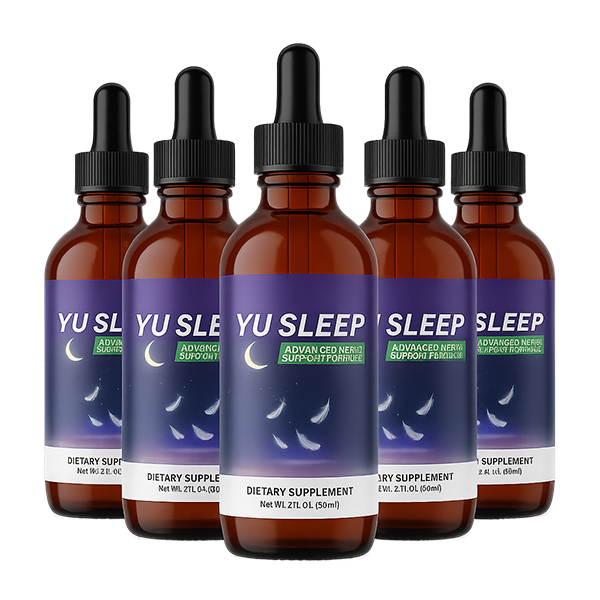
Regular Price: $99/per bottle
Today Only: $39/per bottle
Order Yu Sleep With 78% Discount NowBacked by a 60-Day, 100% Money-Back Guarantee
Lying in bed unable to sleep is one of the most frustrating experiences. Studies show roughly 30 percent of adults regularly struggle with sleep onset, spending 30 minutes or more trying to fall asleep. The good news: faster sleep onset is achievable with the right strategies.
Your circadian clock thrives on regularity. Going to bed and waking up at the same time every day — including weekends — helps sleepiness arrive predictably.
A 30 to 60 minute wind-down routine signals to your nervous system to shift gears. Dim lights, read a physical book, do gentle stretching or deep breathing.
Blue light from devices suppresses melatonin and keeps your brain in alert mode. Stop screens at least 60 minutes before bedtime.
Caffeine has a half-life of five to six hours. Cut it off by early afternoon. Alcohol disrupts sleep architecture later in the night.
Cool (65 to 68°F), dark, and quiet. Invest in blackout curtains and a white noise machine if needed.
Inhale for 4 seconds, hold for 7, exhale for 8. Repeat four times. This activates the parasympathetic nervous system.
Checking the time increases anxiety about not sleeping. Turn your clock away or remove it.
Finish intense workouts at least three hours before bed to avoid elevated core temperature and stimulation.
Journal before bed to externalize anxious thoughts. Meditation and progressive muscle relaxation are also effective.
Yu Sleep combines GABA, L-Theanine, 5-HTP, and low-dose melatonin in a sublingual liquid that works within 15 to 20 minutes. Learn how it works or try it risk-free today.
Try Yu Sleep Risk-Free — 78% Off + 60-Day Guarantee
Backed by a 60-Day, 100% Money-Back Guarantee